Engineering
Created by Captain Emiul Thikaik on Sun Feb 22nd, 2026 @ 4:11pm
Engineering
Engineering on the Crossfield III Class serves as the primary domain for the ship’s technical crew, acting as the centralized hub for managing and maintaining all critical power and propulsion systems. Located deep within the protected engineering hull on Decks 14 and 15, its primary purpose is the regulation of the dual horizontal Warp Cores and the complex mycelial energy distribution required for the Spore Drive.Beyond propulsion, the facility acts as a robust command-and-control center. In the event of a primary Bridge failure, Engineering can be reconfigured to override auxiliary centers, granting the crew total control over shipwide operations. This protected location ensures that even in extreme tactical situations, the Crossfield III remains operational as long as the engineering heart continues to beat.
Displacement-Activated Spore Hub Drive Engineering
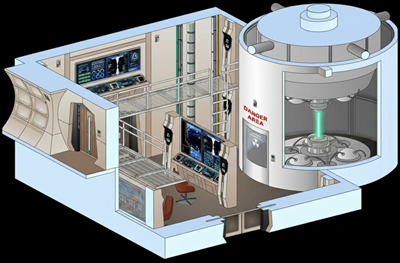 The Displacement-Activated Spore Hub Drive Engineering Bay on the Crossfield III is a high-security, restricted facility specifically engineered to facilitate the ship's advanced organic propulsion. Accessed from a secured entry on the upper level, this compartment serves as the primary gateway between the vessel’s standard power distribution and the mycelial network, housing the specialized hardware required for instantaneous "jumps" across vast galactic distances.
At the center of the bay is the Primary Reaction Chamber, a large, reinforced cylindrical unit where the mycelial reaction is contained. A protective viewing window allows engineering personnel to visually monitor the characteristic green luminescence of the active reaction, while heavy-duty shielding and "Danger Area" protocols ensure the crew is protected from mycelial contamination or radiation leaks. This chamber functions as the heart of the Spore Drive, where refined spores from the ship's cultivation facilities are energized to create a localized fold in the fabric of space-time.
The bay is organized across two distinct levels connected by industrial ladders and maintenance catwalks to allow for total system oversight. The main floor contains the primary monitoring consoles for reaction integrity and spore canister health, while the upper gallery features high-capacity data terminals. Unlike earlier Crossfield Class vessels that relied on biological tardigrades or human augmentations for navigation, the Crossfield III utilizes the integrated Artificial Intelligence Monitoring System Artificial Intelligence to calculate the incredibly complex, multi-dimensional flight paths required to traverse the mycelial network safely. This AI interface coordinates directly with the bay's wall-mounted displays to provide real-time telemetry on the ship’s position within the network and the structural stress levels exerted on the hull during a jump sequence.
The facility is equipped with sophisticated safety airlocks and automated containment systems to isolate the hub in the event of a breach. Because the Spore Drive allows the ship to appear at any point in the galaxy nearly instantaneously, the Engineering Bay is also a critical tactical node, requiring constant synchronization with the Bridge and the AIMS processing core to ensure the ship's exit coordinates remain precise and clear of spatial hazards.
Impulse Engineering
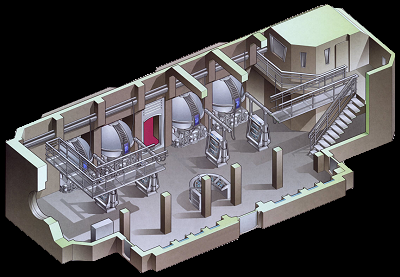 Impulse Engineering, built into each Impulse Engine assembly, serves as the specialized hub for managing sublight propulsion and power generation aboard the Crossfield III. The facility is organized into a two-level configuration designed to oversee the spherical fusion reactors that form the core of the engine assembly. These reactors produce highly energized plasma that is channeled through a driver coil assembly and a vectored thrust nozzle to provide the ship with its exceptionally high sublight power-to-geometry ratio. Any energy not required for propulsion is seamlessly diverted through the Electro-Plasma System (EPS) conduits to supplement the ship's overall power grid and the AIMS AI processing core.
Primary access to the Impulse Deck is situated on the upper level, adjacent to a protected, enclosed control room. This level features a network of suspended catwalks that intersect above the main floor, providing engineering personnel with an unobstructed view of the entire engine complex. To maximize the utility of the space, specialized workstations are built directly into the safety railings of the catwalks, allowing technicians to monitor the stability of the Impulse Grid in real-time. A set of stairs connects this observation level to the main floor, ensuring rapid transit between monitoring stations and the primary reactor hardware.
The main floor is dominated by four spherical fusion reactors embedded into the bulkhead. Each reactor is equipped with touch-sensitive controls that allow for direct manual manipulation, while freestanding, double-sided control panels provide comprehensive status readouts for the entire array. Strategically placed between the central reactors is a heavy-duty doorway that grants engineers access to the internal components of the broader pylon assembly. Directly opposite this doorway, the Duty Engineer utilizes a centralized Master Control Console to oversee every aspect of the Impulse Engine Assembly's operation, ensuring the Crossfield III maintains peak maneuverability during sublight operations.
Warp Engineering
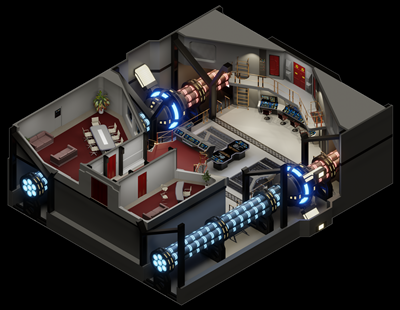 Warp Engineering (also known as Main Engineering) on the Crossfield III Class is a cavernous energy production and propulsion hub located on Decks 14 and 15. Spanning two levels, the facility is the primary control center for the ship's Warp and Impulse Engines, positioned deep within the Engineering Hull to ensure maximum protection during combat. Unlike the vertical core assemblies found on older starship classes, this Engine Room is defined by a horizontal Warp Core configuration featuring two parallel reaction assemblies that run the length of the compartment. This dual-core design provides the massive power required for both standard FTL travel and the unique demands of 32nd Century mycelial operations.
The lower level, Deck 15, serves as the main floor where the engineering crew works in close proximity to the Matter/Antimatter Reaction Chambers. The central area is kept clear of permanent consoles to accommodate special projects or the examination of malfunctioning equipment, while the Reaction Chambers themselves are separated from the crew by reinforced partitions. Within these spheres, supercooled deuterium is injected and reacted with antimatter through a Dilithium Crystal Articulation Frame to produce energetic plasma. This energy is then channeled through horizontal Polaric Warp Conduits to the ship's Warp Nacelles.
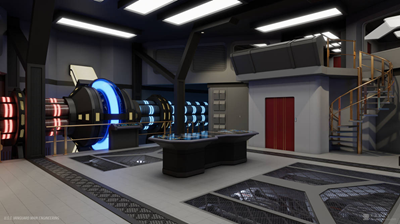 At the heart of the main deck sits the Master Systems Display, a large tabletop-style console used to monitor and control all Main Engineering functions. This workstation provides the crew with a detailed cutaway overview of the entire starship, highlighting any systems experiencing non-nominal conditions and allowing for real-time troubleshooting. The console is designed for simultaneous operation by multiple duty engineers and can be quickly reconfigured to take command of the ship's flight-control or tactical functions if the Bridge becomes inaccessible. Wall-mounted status displays supplement this data, providing constant performance schematics for the Propulsion Systems and the overall "health" of the spacecraft.
The upper level, Deck 14, consists of raised galleries and mezzanine walkways connected to the main floor by ladders and open lift platforms. This level provides access to the upper magnetic constriction segments of the warp cores and the primary Isolinear Control Chip panels. Overlooking the entire facility is the Chief Engineer’s office, a specialized control room that includes repeater versions of all key displays and emergency control stations. A reinforced optical window in the office permits the Chief Engineer to directly observe the visible reaction patterns within the cores without relying solely on sensor displays, ensuring technical vigilance over the ship's most vital systems. A combination Break/Conference Room is parallel to the Chief Engineer's Office that can be used for formal meetings amongst the engineers.
Faster Than Light
Displacement-Activated Spore Hub Drive
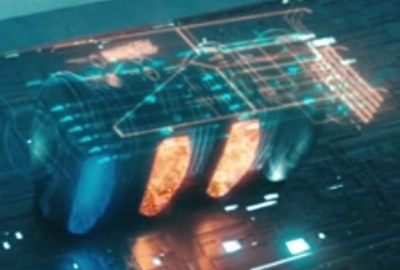 The Displacement-Activated Spore Hub Drive, commonly referred to as the Spore Drive, represents the most advanced and unconventional propulsion system aboard the Crossfield III Class. Unlike standard Warp Propulsion which warps space-time to travel through it, the Spore Drive allows the vessel to "jump" by utilizing the Mycelial Network, a discrete sub-domain of subspace that exists as a vast, microscopic web of fungal filaments spanning the entire multiverse. By interfacing with this network, the Crossfield III can appear at any point in the galaxy nearly instantaneously, effectively bypassing the traditional limitations of faster-than-light travel.
The Mycelial Network and Prototaxites Stellaviatori
The foundation of the drive is the species Prototaxites Stellaviatori, an exotic mushroom whose spores possess the unique ability to exist across multiple planes of existence simultaneously. These spores are cultivated within the ship's specialized Hydroponics and refined into a concentrated fuel source. The Mycelial Network itself is more than just a transit corridor; it is a vital part of the galactic ecosystem, existing within the Mycelial Plane, a space between the traditional universe and other dimensions. To access this network, the ship must penetrate the Mycelial Barrier, the energetic threshold that separates normal space-time from the fungal sub-domain.
Reaction Cube and Spore Hub
The primary hardware for the drive is located within the Spore Drive Engineering Bay, centered around the Reaction Cube, a high-security containment unit where the spores are injected and energized. Within the hub, refined spores are introduced to an energy catalyst, causing the ship to transition into a state of "displacement". During this process, the Crossfield III's primary hull and detached nacelles interact with the network's filaments, allowing the ship to "spin" into the fungal sub-domain. The horizontal Warp Cores and Polaric Warp Conduits provide the necessary surge of power to stabilize the ship as it transits the network, ensuring the structural integrity of the hull against the exotic pressures of the Mycelial Plane.
AI Navigation and the AIMS Core
The most significant advancement of the Crossfield III over its 23rd Century predecessors is its method of navigation. Early iterations of the spore drive required a biological navigator, such as a Tardigrade or a human with augmented DNA, to calculate the non-linear, multi-dimensional paths through the network. The Crossfield III has replaced this biological requirement with the AIMS AI (Artificial Intelligence Monitoring System).The AIMS AI utilizes massive processing power to map the shifting filaments of the Mycelial Network in real-time, calculating exit coordinates with a precision that exceeds biological capabilities. This interface allows the ship to perform "micro-jumps" in combat or long-range trans-galactic leaps with zero risk of biological strain on the crew. The AI monitors the health of the spores and the stability of the reaction cube constantly, adjusting the energy flow through the Polaric Conduits to compensate for any gravimetric fluctuations within the network.
Warp Propulsion System
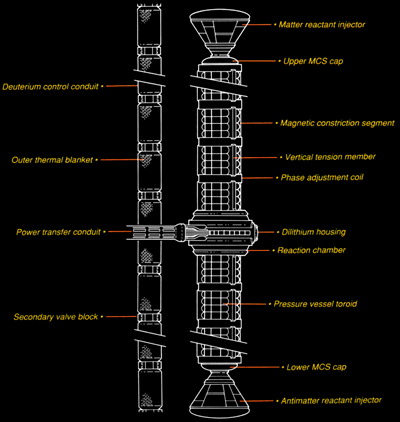 At the very heart of the Crossfield III class is its Matter/Antimatter Reactor (M/AMR), more commonly known as its Warp Propulsion System or Warp Drive. This device allows interstellar travel to occur and works by annihilating antimatter with matter in a dilithium-controlled reaction, which is then channeled for power and to propel the ship on its journey. The Crossfield III utilizes a horizontal configuration consisting of two separate Warp Cores located on Decks 14 and 15. Each Warp Drive assembly contains three primary components: the Matter/Antimatter Reaction Assembly; the Power Transfer Conduits; and the detached Warp Nacelles.
Matter/Antimatter Reaction Assembly
The Matter/Antimatter Reaction Assembly is the component of the Warp Drive where matter and antimatter are introduced to one another, generating power through the annihilation of the particles. The assembly contains three parts: the Reactant Injectors, the Magnetic Constriction Segments, and the Matter/Antimatter Reaction Chamber itself. These component parts are combined into the horizontal Warp Cores, with the Matter Reactant Injector utilizing deuterium fuel and the Antimatter Reactant Injector using an antimatter fuel to create the powerful reaction.The Antimatter Injector is specially modified with magnetic suspension fuel tunnels, preventing the antimatter from coming into contact with normal matter outside of the reactor. Construction advancements permit a six-lobed injector assembly design that allows for seven reactant streams to insert their fuels into the Magnetic Constriction Segments of the Warp Core, allowing the materials to be injected into the Matter/Antimatter Reaction Chamber. The chamber itself channels the flow toward the dilithium crystals stored within the Dilithium Articulation Frame. Computer-controlled rotation allows for the manipulation of how the reactants meet, providing greater control and a "cleaner" power source. This annihilation produces intense plasma, which is directed to the Power Transfer Conduits immediately afterward.
Matter/Antimatter Fuel Storage
Primary Matter Fuel Storage aboard the Crossfield III is provided by a colossal Deuterium Storage Tank within the engineering hull, feeding both the Impulse and Warp Propulsion Systems. This tank typically lasts for approximately five years when fully loaded; however, internal equipment within the Warp Nacelles known as the Bussard Collectors can collect stray Hydrogen to create replacement Deuterium.The Antimatter Storage Pods are magnetized self-contained storage units designed to contain the fuel during the Warp reaction. Consisting of multiple pods, the assembly uses advanced containment fields to isolate the fuel from normal matter. The vessel has also been equipped with an antimatter generation system that can produce fuel should the vessel be unable to return to base.
Power Transfer Conduits and Warp Nacelles
The Power Transfer Conduits split the plasma generated by the reaction into an energy stream for the Warp Nacelles. Magnetic constriction directs the stream, with specialized Electroplasma System (EPS) taps allowing energy to be diverted to power shipboard systems. On the Crossfield III, these conduits incorporate advanced Polaric Warp Conduit technology, which utilizes highly volatile polaric energy to significantly enhance power transfer efficiency. While polaric energy was banned by many civilizations in the 24th century due to its potential for subspace-wide chain reactions, 32nd Century containment advancements allow the Crossfield III to safely harness this high-yield power source to stabilize the massive energy fluctuations inherent in spore-drive jumps.The conduits end within the Warp Nacelles themselves, which consist of three parts: the Plasma Injection System, the Warp Field Coils, and an Emergency Separation System. The Plasma Injectors divert plasma into the Warp Field Coils (constructed of tungsten-cobalt-magnesium and verterium cortenide) which fire sequentially to interact and create the Warp Field. The Crossfield III employs detached, variable-geometry Warp Nacelles, allowing the AIMS AI to generate a more energy-efficient subspace field with less waste.
These advances allow the ship to maintain stability at higher speeds for longer periods; however, to compensate for potential microfractures within the hull at high speeds, failsafe software will automatically disengage secondary coils to decrease speed unless overridden by both the Captain and Chief Engineer. Finally, the Bussard ramscoops on the forward edge of the nacelles can gather hydrogen atoms or vent plasma in an emergency to prevent a catastrophic overload.
Slower Than Light
Impulse Propulsion System
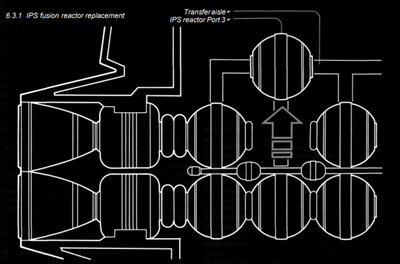 The most striking feature of the Crossfield III Class is its enhanced, high-output Impulse Engines. Used while traveling within a star’s gravity well, through solar systems, or in combat, these systems are used by starships to move at sublight speeds. The Crossfield III's engines have been designed to cater to a versatile support envelope at sublight speeds, offering improved handling in and around densely populated solar systems. These systems provide the vessel with one of the highest sublight power-to-geometry ratios in Starfleet history, a necessity for maneuvering a ship of its scale when not utilizing the Spore Drive.
The Impulse Drive of a Federation starship has maintained a core design philosophy for centuries and consists of four main components: the Impulse Reaction Chamber (Fusion Reactor), the Accelerator/Generator, the Driver Coil Assembly, and the Vectored Exhaust Director. Each Impulse Drive contains three fusion reactors which generate thrust via a standard Newtonian reaction. Energy released in the Impulse Reaction Chamber by a fusion reaction is then injected into the Accelerator/Generator, which speeds up the plasma and feeds it to the Driver Coil Assembly.
Similar to the Warp Drive, Electroplasma System (EPS) taps divert a portion of this energy to power other systems on the ship, providing critical redundancy for the AIMS AI and life support. The Driver Coils create a field effect that passes energy to the Vectored Exhaust Director, which directs the exhaust to thrust the vehicle in the desired direction. Each of the Crossfield III’s engines consists of four linked Impulse Drives rated based upon the velocity they can provide.
Regardless of an engine’s maximum potential, Starfleet generally limits impulse travel to .25c to minimize the risk of time-dilation problems which occur as a ship approaches the speed of light, though the Captain can override this directive in tactical situations. Furthermore, operating at Maximum Impulse for longer than 24 hours risks damaging the driver coils and stressing the hull's structural integrity.
Reaction Control System
The Reaction Control System (RCS), commonly referred to as the ship's thrusters, provides the Crossfield III Class with essential low-velocity propulsion, station-keeping, and high-precision maneuvering control. While earlier vessels relied on traditional gas-fusion reactions to produce propellant, the Crossfield III represents a significant technological leap by utilizing integrated Impulse Thrusters. This technology, which reached operational maturity following initial testing on the Century-class in the 25th Century, allows for much more aggressive and precise movement than standard gas-based systems.Located at strategic points across the primary and secondary hulls, these Impulse Thrusters utilize miniaturized fusion reactors to generate high-energy plasma, rather than simple cold gas. This plasma is fed into high-output driver coils that create a localized subspace field, reducing the ship's effective mass and allowing for lightning-fast orientation changes during combat or complex docking maneuvers. By firing these thrusters in coordinated bursts, the AIMS AI can rotate or translate the massive vessel with a degree of agility previously reserved for much smaller scout ships.
The propellant is directed through advanced vectored nozzles that can pivot to provide thrust in virtually any direction. Because these systems draw directly from the ship's primary deuterium fuel reserves and utilize high-energy fusion, they offer a significant power-to-thrust ratio improvement over 23rd Century gas-fusion models. This high-performance maneuvering system is critical for a vessel of the Crossfield III's geometry, ensuring that the ship can maintain optimal alignment for Spore Drive jumps and tactical engagements alike.
Speed Chart
Warp Speed Distance Chart | |||||||
(400,000 km) |
(12 billion km) |
(5 ly) |
(20 ly) |
(8,000 ly) |
(2 million ly) | ||
| Full Thrusters | .00001 | 42.0 Hrs | 142.0 Yrs | 558,335.0 Yrs | 2,000,000.0 Yrs | 1.12 Billion Yrs | 223.33 Billion Yrs |
| Full Impulse | .25 | 5.38 Sec | 44.0 Hrs | 20.0 Yrs | 80.0 Yrs | 40,000.0 Yrs | 8,000,000 Yrs |
| Warp 1 |
1 | 1.3333 Sec | 11.1 Hrs | 5.0 Yrs | 20.0 Yrs | 8,000.0 Yrs | 2,000,000 Yrs |
| Warp 2 |
10 | 0.1323 Sec | 1.1 Hrs | 181.1 Days | 2.0 Yrs | 793.7 Yrs | 198,425.1 Yrs |
| Warp 3 |
39 | 0.0342 Sec | 17.1 Mins | 46.9 Days | 187.5 Days | 205.4 Yrs | 51,360.1 Yrs |
| Warp 4 |
102 | 0.0131 Sec | 6.6 Mins | 18.0 Days | 71.9 Days | 78.7 Yrs | 19,686.3 Yrs |
| Warp 5 |
214 | 0.0062 Sec | 3.1 Mins | 8.5 Days | 34.2 Days | 37.4 Yrs | 9,356.9 Yrs |
| Warp 6 |
392 | 0.0034 Sec | 1.7 Mins | 4.6 Days | 18.6 Days | 20.4 Yrs | 5,095.6 Yrs |
| Warp 7 |
656 | 0.0020 Sec | 1.0 Mins | 2.8 Days | 11.1 Days | 12.2 Yrs | 3,048.2 Yrs |
| Warp 8 |
1,024 | 0.0013 Sec | 39.1 Sec | 1.8 Days | 7.1 Days | 7.8 Yrs | 1,953.1 Yrs |
| Warp 9 |
1,516 | 0.0009 Sec | 26.4 Sec | 1.2 Days | 4.8 Days | 5.3 Yrs | 1,318.9 Yrs |
| Warp 10 |
Infinite | ||||||
Disclaimer
Engineering utilizes several designs created by multiple artists. Specific works include:- Spore Hub Drive Engineering was designed by Falke2009. No infringement intended.
- Impulse Engineering was designed as the Quarren Power Plant. No infringement intended.
- Warp Engineering was designed by Bobye2. No infringement intended.
Star Trek was created by Paramount Pictures. No infringement intended.
Categories: No categories found